
You’ve likely taken antibiotics before, or know someone who has—used to treat bacterial infections, they’re among the most commonly prescribed medications in the world. But taking antibiotics often comes with its own unpleasant symptoms in addition to the sickness you’re already feeling, such as nausea or stomach cramping. This is because many antibiotics are not hyper-specific to the bacteria they are targeting—rather, an antibiotic targets all of the bacteria in the gut, the good and the bad. This is bad news for your gut microbiome, a community of trillions of bacteria that play a large role in maintaining our health in a variety of ways, from immune function to digestion. Taking antibiotics can inadvertently wipe out your good gut bacteria, which is what may cause additional unpleasant symptoms.
Luckily, your gut microbiome will bounce back with a nutrient-rich diet, but you probably won’t forget the negative experience of taking an antibiotic. This makes it challenging to ensure that patients take their whole course of antibiotics—which is necessary to fully treat the infection and prevent antibiotic resistance. “If the medication itself makes you feel sick, you’re not going to want to take it,” said Cynthia Dowd, a professor and chemistry department chair at George Washington University. Dowd is among researchers leading an effort to synthesize microbe-specific antibiotics, or antibiotics that will only target one kind of bacteria. This would not only improve the experience of taking antibiotics, but also address the rapidly increasing risk of antibiotic resistance that is challenging health systems all over the world.
Bacteria: Humanity’s Most Persistent Predator
The discovery and synthesis of antibiotics beginning in the early 20th century was one of the largest turning points in human history. It allowed us to advance our medical technologies and treat numerous deadly diseases, such as pneumonia or urinary tract infections, extending our lifespans and improving our quality of life immensely. For a few decades, it seemed as if we would remain forever one step ahead of our bacterial nemeses, with new antibiotics being discovered regularly and plentifully. However, antibiotic resistance was quick to take hold as people started using antibiotics heavily and without caution, not realizing the potential damage of overuse. When bacteria are exposed to an antibiotic, they are either killed or they survive because they, by chance, have mutations in their genome that allow them to resist the effects of a drug. Resistant bacteria can then spread their resistance to other germs through a unique process called "horizontal gene transfer” in which one bacteria can directly transfer DNA genes to another. This means that in a population of bacteria, only one has to originally be resistant in order for the whole colony to become resistant. Therefore, the inappropriate use of antibiotics kills good bacteria in your body unnecessarily while also leaving behind resistant bacteria to proliferate, building antibiotic resistance that makes these drugs ineffective the next time you get infected.
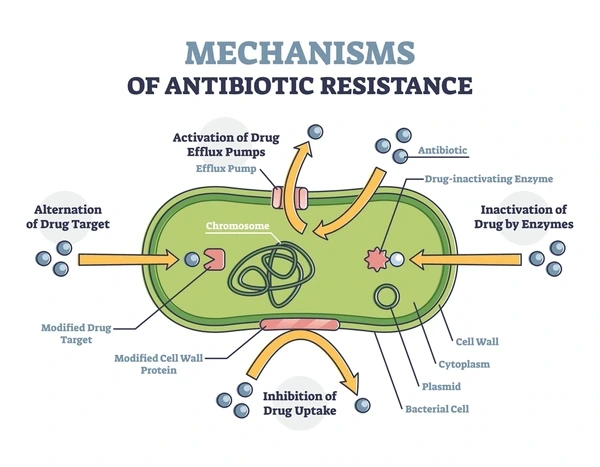
Today, antimicrobial resistance (AMR)—the umbrella term for resistance in all microbes, including bacteria, fungi, viruses, and parasites—is the top global public health threat, directly responsible for 1.3 million global deaths in 2019 and contributing to nearly 5 million deaths, according to the World Health Organization. This is jeopardizing many of the modern healthcare procedures and treatments that rely on the use of antibiotics, like surgery and cancer chemotherapy, making them riskier. This is why Dowd’s work is so important: it is imperative that new antibiotics are made in order to protect the effectiveness of these drugs, as well as help treat people with resistant infections and ensure better treatment experiences. This, in tandem with more responsible use of antibiotics, is how we can curb the antibiotic resistance crisis we are facing.
Made to Order Antibiotics
The Dowd Lab at GWU is spearheading multiple research endeavors to develop small-molecule antibiotics that specifically target only the bacteria they aim to wipe out. Small-molecule antibiotics are the most common type of antibiotic drugs produced because of multiple advantages they offer, including cost effectiveness and often being orally administrable. Dowd’s lab aims to identify biochemical targets that are relevant to the survival of a bacteria, and then synthesize inhibitors of that target in order to kill the bacteria. Not only does this method provide a new treatment option for resistant infections, but it also decreases the risk of resistance developing. Any time you take an antibiotic, there is a high likelihood that some of the good bacteria in your gut will have random mutations that make them resistant to the drug. The vulnerable gut bacteria will be killed, leaving behind resistant gut bacteria. So, taking an antibiotic that only kills the harmful, illness-causing bacteria will reduce the ability of resistant gut bacteria to colonize your microbiome. And because of this, a drug like this will likely spare you from the uncomfortable and unpleasant side effects that accompany many prescribed antibiotics. “[Patient] compliance would improve,” Professor Dowd commented, meaning better outcomes and decreased risk of antibiotic resistance developing for patients.
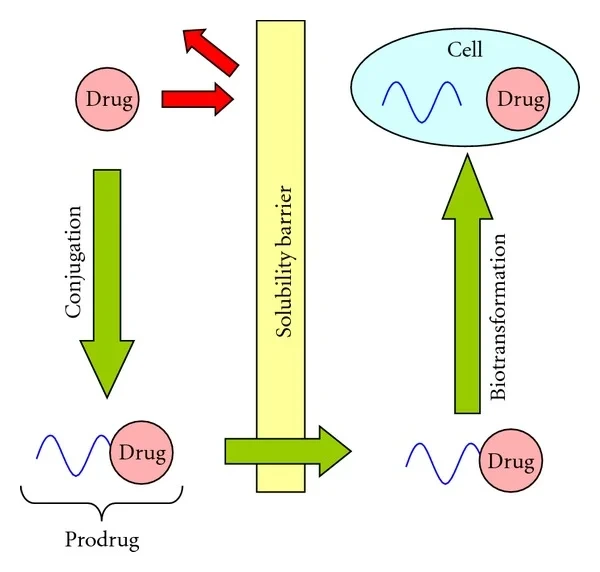
One method for developing these new drugs is through the synthesis of “prodrugs”—in this case, a chemical compound designed to only become active when it interacts with a specific bacteria. A prodrug includes a compound containing the parent drug and a molecule attached to it that makes the drug "pharmacologically silent,” meaning the drug will not have any effects when initially administered in a human. When the drug interacts with the bacteria it is designed to target, it undergoes a chemical transformation that releases the parent drug. The prodrugged molecule “is not active against anything,” but when the prodrug piece is “clipped off, now you have released the active warhead,” Dowd explains, “and it is only active by the organism that has activated it.” Prodrug antibiotics offer many advantages because of this microbe-specific activation, including altering the bioavailability, absorption, and toxicity of a drug without changing the drug’s mechanism of action, or the biological pathway it targets in order to kill a bacteria. Because of this, prodrugs have a great potential to control antibacterial resistance. They can be used to revive antibiotics that have shown to be effective against a certain bacteria but have been deemed dangerous for humans because of their poor pharmacokinetics, or negative health effects. Dowd’s work utilizes this strategy in order to combat some of our toughest and most prevalent bacterial foes.
Taking on the Fiercest Pathogens
Dowd’s lab focuses on creating new antibiotics to treat tuberculosis, malaria, and ESKAPE pathogen infections, all of which are identified as priority pathogens by the World Health Organization in need of new drugs to treat infections as quickly as possible. The building blocks of these illnesses, namely Mycobacterium tuberculosis, Plasmodium falciparum (the organism that causes malaria), and ESKAPE pathogens (a group of 6 different bacteria), are all organisms that have developed multi-drug resistance and adaptations that allow them to thrive in modern hospital settings. This has made them a particularly dangerous and rampant problem all over the world. One of Dowd’s long term projects has been reengineering a drug called fosmidomycin, which was designed to treat tuberculosis and malaria. Fosmidomycin originally failed clinical trials because its cure rate was too low, but no other drug targets the same pathway that it does, and these bacteria have evolved defense mechanisms against most other antibiotics. Dowd’s lab is working on creating chemical analogs of the drug to make it more potent, which consists of using fosmidomycin as a template and then engineering multiple versions of potential prodrugs. These different versions will have different pharmacological properties depending on the molecular “piece” that is added on to the parent drug to turn it into a prodrug. This is a lengthy process, because in order to identify even just one new candidate, Dowd’s lab has to test a lot of different prodrug “pieces” that can be tacked on to find out which ones will be effective. Dowd calls it “hard, but possible” work. This is one of many reasons why Dowd’s lab is part of an interdisciplinary community of researchers working on this problem.
Collaboration is Key
When considering an issue as widespread as antibacterial resistance, communication and collaboration between researchers, healthcare workers, and governments is necessary. Dowd’s lab proves how collaboration between scientific disciplines is vital to tackling complex issues such as antibacterial resistance. Dowd focuses on the organic chemistry of drug synthesis, but there are “a lot of different moving pieces.” “The hard part,” Dowd explains, “is finding that unique mechanism [in a bacterial organism] that you can then exploit to make a specific drug for.”
For this reason, Dowd collaborates with microbiologists who work on identifying the unique pathways in the bacteria. These microbiologists take the molecules Dowd’s lab synthesizes and test them on bacterial colonies to determine exactly how well the drug is working. After that, the group can try applying them to infected animals, and eventually humans. “It's important to understand that no one person is an expert in all of that,” Dowd emphasized.
“It takes a group of researchers, each with their own specialized knowledge, to take on the large project of novel antibiotic drug development.”
On a larger scale, it is important for countries to monitor antimicrobial resistance and share information as new developments occur. The World Health Organization encourages countries to participate in its “Global Antimicrobial Resistance and Use Surveillance System” (GLASS), and has seen increases in participation in the past several years, gaining nearly eighty participating countries since 2016. However, many participating countries still lack the resources needed to generate reliable data on the status of antibacterial resistant in their country. In 2024, global health leaders approved a "political declaration” on antimicrobial resistance, establishing a set of clear goals and actions to reduce deaths and unite the health of humans, animals, and the environment. The only way to mitigate the situation is through a global effort to control our use of antibiotics, increase access to appropriate medical care, and fund research projects that aim to synthesize more effective drugs. Dowd’s lab is one important piece in a larger effort that spans the globe—and includes all of us. Combating antibiotic resistance starts with simple actions that prevent infections in the first place, such as washing your hands regularly, practicing food safety, and using antibiotics only when necessary. The path ahead may not be straightforward, but it is crucial we continue to work together in order to fight antibiotic resistance and improve the health of all humans.