
Mark Edberg is not your typical university professor. Partly because in his free time he is a working musician and founder of the band the Black Shag Sherpas, but also because he has appointments in three different departments at George Washington University: the Department of Prevention and Community Health in the School of Public Health, the Department of Anthropology, and the Elliot School of International Affairs. Edberg is a cultural anthropologist whose research has focused on developing evidence-based, collaborative-community health interventions in vulnerable populations, spanning several continents. His work is dedicated to making public health more equitable and creating interventions that are designed through a working relationship with community members.
Finding His Stride, Asking Big Questions
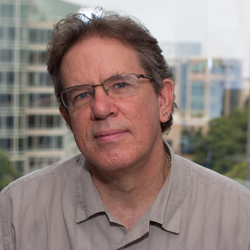
Edberg started his research career as a cultural anthropologist, someone who studies human societies and their development and behavior. He was interested in “cultural formations that arise or evolve out of” poverty. In other words, he wanted to understand how people in impoverished situations build and share beliefs, values, and social practices. He asked questions like: What are the norms and values that grow out of environments of poverty, and how are these related to structural constraints? What kinds of people and life-pathways become admired and idealized, and why?
At the time Edberg was working on his PhD dissertation in the mid-90s, the HIV crisis was receiving a lot of attention. He was also beginning a new project doing ethnographic research with runaway and homeless youths struggling with substance use and HIV/AIDS. Ethnography is a type of qualitative research method, often utilized by anthropologists, where the researcher will immerse themselves within a community or population to observe and understand social dynamics and behaviors as viewed by the people within it. Data is collected in the form of notes and descriptions or interviews.
Edberg’s anthropological work then “moved into the public health realm” as he advanced his career and continued to work in populations contending with health disparities. Since then, he has been bringing an anthropological perspective to developing public health interventions in communities by using collaborative, people-centered approaches. Edberg focuses on communities that are impoverished or marginalized in some way and suffer disproportionately from a health vulnerability or condition, such as HIV, substance abuse, diabetes, or violence. Health intervention research, in general, seeks to have an impact on community health by shifting the underlying health risk factors or directly changing health behaviors. Factors that influence health include things like individual behaviors, knowledge and beliefs, relationships and context, social and economic status, structural factors, physical environment, or genetic predispositions.
Intersecting Health and Culture
Anthropologists working in the public health sphere are not uncommon. The Society for Medical Anthropology is a prominent and active subgroup of applied and academic cultural anthropologists, ranging from people who actually work in medical settings to researchers on population and community health (domestic and global), and educators. Edberg considers himself as someone who “walks the line” between academic anthropology and applied anthropology, or between theory and practice.
Public health may at first seem like a subject only fit for doctors and policy makers. However, health is a “basic aspect of human culture,” as Edberg puts it. This makes it a prime focus for cultural anthropologists. “Even from the most basic issue of ‘what does health mean’ or ‘how do you know somebody is healthy’...there are a lot of ways in which people think about that, not just biomedically,” says Edberg.
When you imagine a classroom, you probably have an image that jumps to mind. With that image comes associated pieces of information, like what kind of people occupy classrooms and what one does in a classroom. “None of that is given,” Edberg says. “[You have that image] because you, as an encultured person, have learned something about this cultural model that's shared between people of your culture about what a classroom is and what it means.” However, if you've never seen or been introduced to the idea of a classroom growing up, you might interpret one differently when you first encounter it.
In relation to health, behaviors that can pose health risks can be differently understood by a community based on the cultural context around those behaviors. Religious, family, dietary, and interpersonal customs are all examples of how interactions between patients, doctors, and a biomedical system can vary by culture.
This is why looking at the context within a community surrounding a particular health vulnerability is so important. “One of the problematic issues in the past has been that so much of the time people try to focus on single factors,” Edberg says.
A recent example of how anthropology can be beneficial in addressing public health issues is the COVID-19 pandemic. Historically, pandemics and outbreaks of diseases have been a breeding ground for distrust and rage among citizens, distrust in the healthcare workers and governments trying to protect them, as well as among different groups of people. It's easy to chalk up the social violence and anxiety that arises to ignorance, but that is most often not the root cause.
Even when the scientific facts about a disease are widely circulated and known, like with COVID-19, discourse can still occur about the origins or mechanism of a disease. As well, it is important to acknowledge that medicine and humanitarianism have been used in areas of the world to advance the interests of outsiders, so deeply held suspicions towards outside help tend to stem from historical experience. The intervention system must be tailored to the realities of people’s lives in order to get people to change their behavior in ways that will protect themselves. This is where anthropologists become extremely useful in working with a community to find strategies for coping with an outbreak, rather than prescribing a one-size fits all approach that fails to consider the context in which it is working.
The Method: Listening Intently
Before trying to introduce any sort of health intervention, Edberg begins by trying to understand the cultural values and norms of a community, and specifically how that community regards the health issue they are dealing with. These health vulnerabilities range from things like HIV, diabetes, substance abuse, to even violence. His goal at this stage in a project is to try and elucidate the causal factors of why the community is vulnerable to the health issue.
To prevent mistrust and miscommunication, he begins every project with a “big dose of humility”. He does not see his role as fixing anything or seeking compliance, as has been the perspective in biomedical public health in the past. “I can’t fix the issue”, Edberg says, “I can only say, ‘here’s an idea’ or ‘here’s an approach we’ve tried in the past [with other groups]’. You tell me what you think is going on, what the causes are.” People living in these communities who are grappling with health vulnerabilities are usually aware of the issue and have their own ideas or informal interventions. Edberg expressed a “deep respect” for the people of the community “who are already trying to do what they can do”.
Edberg’s approach as a researcher and public health professional is to provide the resources and support that will allow people in the community to find health interventions that would be acceptable and appropriate to implement into their community. “A lot of times my work is building on knowledge or networks that are already there,” he says.
This gets at the core of his collaborative-community approach — an intervention will have much more sustainable capabilities if it comes from and is understood by the community members themselves within their values and cultural framework. He acknowledges that “it’s messy” to work with people, and he often finds himself in grey areas when trying to decide what the best course of action will be. The data requirements of a grant-funded research or intervention effort, for example, may be a burden or even clash with immediate community needs. Despite the tensions and challenges that anthropology-based public health work can present, Edberg always maintains his people-first approach.
Applying Theory to Life
One project that Edberg is currently working on is a collaborative-community effort to reduce gun violence among adolescents living in the Washington Highlands community in Southeast Washington, D.C. The program is called “Run It Up”—a name that came from kids living in the community. Washington Highlands is located within Ward 8 of D.C., a predominantly Black and low-income area of the city.
The community has contended with a history of generational and systematic poverty, racism, and lack of basic resources like adequate health care and educational opportunities. These constraints have led to social norms surrounding violence that evolved in order for the community to cope with the stress of discrimination and exclusion from resources and opportunities.
According to Edberg, children growing up in such environmental conditions, both urban and rural globally, often learn to view firearms-related violence as one of the few paths to gaining respect, reputation, or power. The goal of the program is to change these possible pathways by introducing programs and resources that give kids a chance to understand and experience non-violent pathways to success.
These programs have been developed with the involvement and feedback of community members, including adolescents, with the aim of finding pathways that kids living in the area view as meaningful, attractive, and rewarding. Of note is the use of social media as an important tool in spreading awareness to the community of the new opportunities present. This intervention exemplifies how an intervention can address both the social perceptions of violence and the structural elements that facilitate it, by changing perceptions and providing novel resources and opportunities.
Edberg is also working on a collaboration with Native American Lifelines (NAL), a federally-funded health and social service provider for urban Native Americans in the Baltimore and Boston metro areas. They have developed a survey scale for assessing the impact of indigenous historical trauma to explore its effects on health outcomes in these Indigenous communities. Historical trauma is multigenerational trauma experienced by specific groups related to major events of oppression, such as the violent colonization of Native American people. The psychological and physical trauma inflicted by these events gets passed down from generation to generation, negatively affecting both the physical and mental health of each generation.
Native American and Alaska Native people have shorter lifespans than all other populations in the U.S. and continue to die at higher rates from chronic liver diseases, diabetes, and suicide, according to the U.S. Department of Health and Human Services. Edberg and colleagues are trying to understand how historical trauma is passed down and how it continues to affect the health of indigenous Americans. The project focuses on urban Native Americans, who face unique challenges related to loss of land, controversies around identity and tribal recognition, economic/social exclusion, and other factors.
The first phase of the project used qualitative data—personal accounts and contextual information—to construct a tool for collecting quantitative data in the form of surveys that can be given out to participants. The researchers can use survey answers to look for correlations between the experiences of these Indigenous people and health. Specifically, they are looking to examine health risks and outcomes that represent health disparities/inequities for urban Native Americans.
Taking Time for Empathy
As Edberg has shown through his work, anthropology has a place in health and medicine for developing a more nuanced understanding of people in order to adapt care to their circumstances. He continues to push the field of public health and anthropology forward by centering empathy and humanity in order to address the health needs of communities.