
How do you make a peanut butter and jelly sandwich? It's a simple question at face value, but its answer can lead to either a nostalgic sandwich or a comical disaster. While this basic exercise can create infectious laughter, it also stresses the importance of clear guidance and the detrimental effects of obscure instructions.
The Foundation of the DGA
Earlier this year, the Dietary Guidelines for Americans (DGA) were released by the U.S. Department of Health and Human Services (HHS) and the U.S. Department of Agriculture (USDA). In 1977, the framework for the dietary guidelines that we know today was established when the “McGovern Report,” also known as “Dietary Goals for the United States,” was published by Congress. Then, in 1980, the first edition of the DGA was released. Following its publication, the Dietary Guidelines Advisory Committee was formed and met to review the evidence and the scientific report that would be submitted to the HHS and USDA for the 1985 second edition report. This quinquennial cycle has continued, and earlier this year, the tenth edition of the Dietary Guidelines for Americans was published.
The DGA have been a guiding light for Americans, providing the resources to remain informed and make educated decisions when it comes to the foods they consume. The Dietary Guidelines for Americans strive to make evidence-based information clear and accessible, reduce chronic disease, and improve the population’s general health. While some Americans may not know the DGA explicitly by name, almost all Americans have been impacted by its work. The DGA has been used as a basis for determining the types and amounts of food provided in federal food programs and serves to guide food distributors in their practices.
A Shift in the 2025-2030 Guidelines
On January 7, 2026, the HHS and USDA released the 2025-2030 Dietary Guidelines for Americans, leaving many surprised by their deviations from previous editions. Similar to previous editions, there was an emphasis on consuming fruits, vegetables, and whole grains, while also encouraging limits on added sugars, highly processed foods, refined carbohydrates, and excess sodium. However, critics/nutrition experts have noted that the 2025-2030 DGA struggles to disseminate nutrition guidance to the public in a clear and coherent manner.
One of the most notable changes in the new guidelines is their length. While the nearly tenfold reduction in length benefits the general reader's attention span, it also makes it more difficult for healthcare professionals and nutrition educators to provide detailed guidance. One of the central goals of the DGA is to eliminate the knowledge barrier between dietary guidelines and the American public. This relies on nutritionists, health professionals, and policymakers having a comprehensive understanding of the guidelines so they can relay them for others. However, the condensed format of the 2025-2030 guidelines may limit that process, potentially creating a significant barrier to public understanding of the nutritional guidance set forth by USDA and HHS.
Protein, Fiber, and the New Food Pyramid
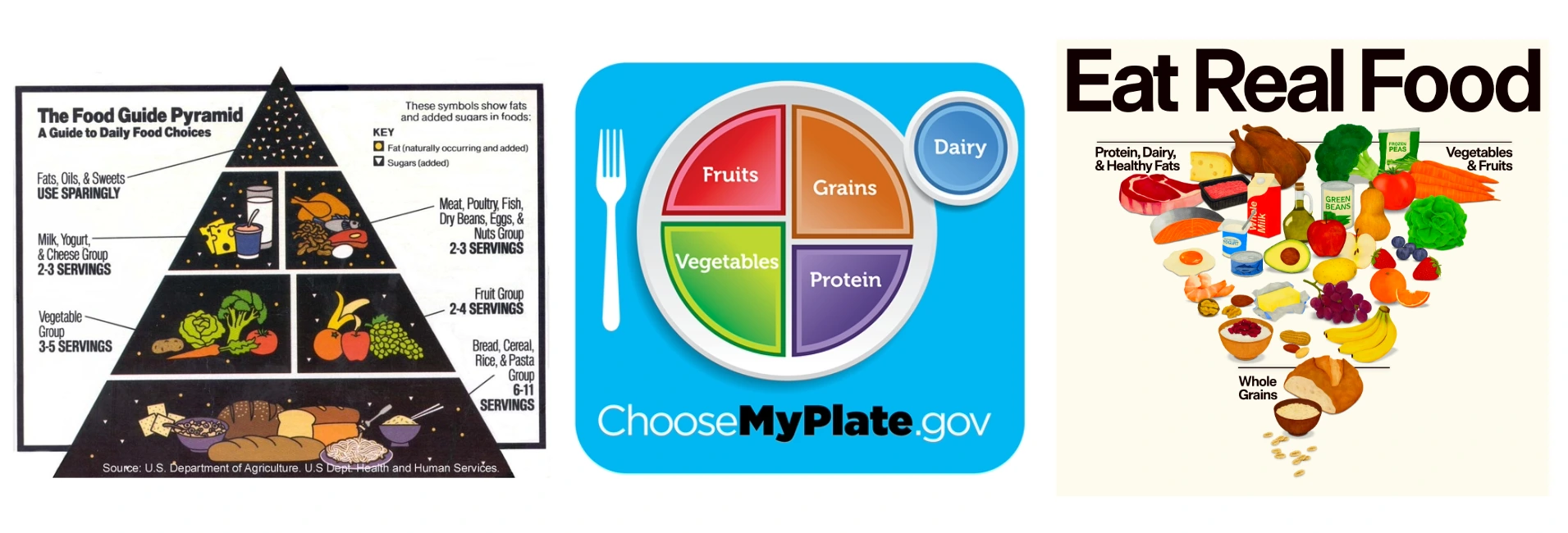
Another major change in the tenth edition is its emphasis on protein and its reduced attention to fiber. With the restructuring of the food pyramid, protein has been moved to the base of the pyramid, comprising a significant portion of our diet. The restructuring of the pyramid is especially interesting given that most Americans hit target levels of protein consumption and struggle with adequate fiber consumption. In the 2025-2030 DGA guidelines, it is recommended that people consume 1.2-1.6 grams of protein per kilogram of body weight per day, a significant increase compared to previous recommendations, and significantly harder to achieve. In order to consume the recommended amount of protein, one would have to surpass the suggested amount of sodium and saturated fat, adding another barrier for the public in understanding and implementing the Dietary Guidelines for Americans.
Ambiguity in Condensed Guidelines
While certain areas of the DGA introduce additional dietary guidelines that may confuse, other areas have been condensed. Alcohol consumption is one example. In previous years, the DGA recommended two or fewer drinks per day for men and one or fewer per day for women. In the 2025–2030 guidelines, however, no specific number of drinks is recommended. Instead, the guidelines simply advise Americans to consume less alcohol to improve overall health outcomes. The vagueness in this newest edition may create additional barriers to Americans adhering to the nutritional goals the DGA sets forth, due to health professionals lacking detailed guidelines to use while educating individuals.
The Recipe for Clearer Guidance
So, how does one make a successful peanut butter and jelly sandwich? Sure, premium peanut butter and homemade jelly may set the foundation for a delicious treat. However, if the chef is unclear about how best to balance the ingredients or when each ingredient should be used, the sandwich will be a total failure. The DGA should be approached with the same intricacy and care as this beloved American sandwich. They need to be simple, yet clear, so that educators such as nutritionists, health professionals, and policymakers can best advise Americans on how to maximize their health and meet their nutritional goals.