
A Conversation with Professor Katrina Orsini
Leather grown from shrimp shells. Fabrics woven from pineapple leaves. Materials designed like spider silk. These innovations represent a rapidly growing field known as biodesign, where biology, chemistry, and engineering intersect to reimagine the future of fashion.
As the fashion industry searches for new ways to reduce its environmental footprint, researchers are increasingly turning to biology for solutions. As stated by the World Economic Forum, the fashion industry is responsible for 10% of global emissions, meaning it produces more greenhouse gases than all international flights and maritime transport combined, and is the second-largest consumer of water globally—making new material innovation an increasingly important area of research.
Professor Katrina Orsini, a textiles scholar and faculty member at The George Washington University, has spent her career mapping the hidden systems behind what we wear, from biomedical implant textiles at the Smithsonian's Cooper Hewitt Design Museum to the ethnographic fabric traditions housed in GW's own museum collection. Her work centers on a deceptively simple question: what can the past teach us about improving clothing production in the present?

Orsini earned her master's degree at Parsons School of Design, where sustainability is thoroughly embedded into the curriculum. Students are encouraged to investigate not only how clothes are made, but why they are made in the first place. Through her research and teaching at GW, Orsini takes that same approach with her students, encouraging them to look beyond trends and examine the science, history, and engineering behind the materials that make up the fashion industry.
Through the exhibition Source Material: Lessons in Responsible Fashion, which was on display at The George Washington University Textile Museum in D.C. for nearly a year, Orsini highlights how designers are rethinking the materials used to make clothing by drawing inspiration from biology, historical textile traditions, and agricultural waste. Together, these approaches demonstrate how the intersection of science and design can reduce the hefty environmental price of today’s fashion industry.
What is Biodesign?
Biodesign combines biology, materials science, engineering, and design to create products inspired by living systems or built from biological materials. Rather than relying solely on petroleum-based plastics and synthetic fibers like the industry currently does, researchers study how nature solves problems and apply those lessons to new technologies.
Orsini sees two major directions for clothing production within biodesign: rediscovering traditional natural fibers that have fallen out of widespread use, and developing entirely new materials through biomimicry.
Biomimicry is the practice of studying nature's engineering, or its construction and functioning, rather than simply copying its appearance. Scientists analyze protein structures, microscopic architecture, and molecular organization before recreating those characteristics in the laboratory. As highlighted by The Library of Congress, the concept has already inspired innovations ranging from Velcro, modeled after burrs that cling to animal fur, to climate-resistant methods inspired by hippos, and adhesives modeled after gecko feet. Orsini believes biomimicry in the biodesign realm is “really promising.”
Before scientists began engineering biomaterials in laboratories, however, many regions already relied on diverse natural fibers that have largely disappeared from mainstream fashion.
Forgotten Fibers
Many sustainable fibers existed long before the rise of industrial fashion. Piña cloth, banana fiber, yak wool, and camel hair have been used for centuries, yet many have faded from mainstream production because they are difficult to manufacture at a global scale.
According to Threads, piña cloth, originating in the Philippines, dates back hundreds of years, with records from the Spanish colonial period in the 1500s, though Indigenous communities had been extracting fibers from pineapple leaves long before European colonization. After the fruit is harvested, the leaves—typically considered agricultural waste—are stripped by hand. Fine cellulose fibers are extracted, washed, dried, and spun into thread, creating an entirely manual textile. The resulting fabric is lightweight, breathable, biodegradable, and produced without cultivating an additional crop.
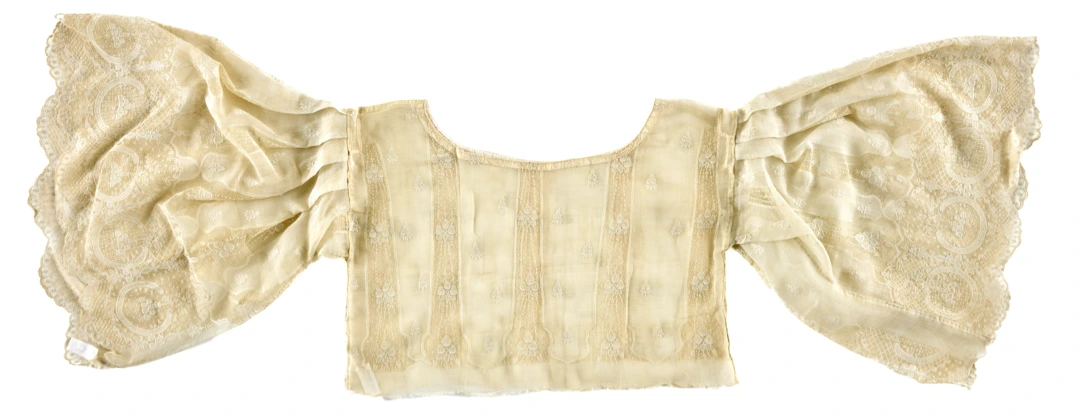
As depicted in PieceWork Magazine, banana fiber has an equally rich history spanning the Philippines for more than two thousand years, and century-old traditions in Japan, India, and Nepal. Rather than coming from the fruit itself, the fibers are extracted from the banana plant's pseudostem after harvest, also recognized as a "false stem" formed by overlapping leaf sheaths rather than woody material, as demonstrated by The National Library of Medicine. Farmers strip long cellulose fibers from the stem before cleaning, drying, and weaving them into textiles. Rich in cellulose, banana fiber is naturally strong, flexible, moisture-absorbent, and biodegradable, making it an attractive renewable material for modern designers.
Animal fibers have also played an important role throughout history. As specified by The Textile School, nomadic communities across the Tibetan Plateau, Mongolia and the Himalayas have relied on yak wool for thousands of years because of how its hollow fibers trap air, creating exceptional insulation while remaining lightweight and moisture-wicking. Camel hair, traditionally collected from naturally molting camels rather than shearing, has been used across the Middle East, North Africa and Central Asia for its warmth, softness and natural climate adaptability, as cited by The Textile School.
According to Orsini, these fibers represent more than environmentally friendly alternatives. They also preserve cultural traditions and regional knowledge that industrial manufacturing has gradually displaced.
"We just don't see them present in the fashion industry because they're not scalable," Orsini said.
While researchers are rediscovering forgotten fibers, others are looking directly to nature itself for inspiration.
Biomimicry: Learning from Biology
Rather than harvesting more natural materials, biomimicry studies why those materials perform so well. Scientists investigate how biological structures achieve remarkable strength, flexibility and durability, then attempt to engineer materials with similar properties.
One of Orsini's favorite examples is silk.
"Pound for pound, silk is stronger than steel."
Silk owes its remarkable strength to highly organized fibroin protein chains that efficiently distribute force throughout the fiber. Materials scientists study these molecular structures, hoping to engineer synthetic fibers with similar mechanical properties while reducing dependence on traditional silk production.
"There are certain qualities that that material has that if we can replicate them, we can potentially move away from having to farm hundreds of thousands, maybe millions of silkworms every year."
Nature has already engineered remarkably efficient materials. Rather than recreating them exactly, researchers hope to understand the principles behind their performance and apply those lessons to new textile technologies.
Turning Waste into New Materials
One designer featured in Source Material is already applying that philosophy to another iconic material: leather.
Vietnamese designer and Parsons graduate Uyen Tran founded TomTex, a materials innovation company, after becoming interested in reducing waste generated by the shellfish industry. Instead of relying on animal hides, Tran develops leather alternatives using chitin-rich shellfish waste and other bio-based ingredients.


As stated by The Royal Society Publishing, Chitin, found in shrimp shells, crab shells, and insect exoskeletons, is the second most abundant natural polymer on Earth after cellulose. Lightweight, strong, flexible, and biodegradable, it provides structural support in nature while offering scientists a promising building block for sustainable materials. Researchers can process chitin into chitosan, a more versatile form that can be molded into films, fibers, and biodegradable plastics.
Today, scientists are exploring chitin not only for leather alternatives but also for wound dressings, surgical materials, water purification systems, and biodegradable packaging. By transforming an abundant waste product into a usable textile, projects like TomTex demonstrate how biodesign can rethink not only what materials are made from, but where their ingredients come from.
The Scale Problem
Despite its promise, Orsini cautions that innovation alone does not guarantee sustainability.
Companies developing fiber-to-fiber recycling technologies, alternative materials, and sustainable manufacturing processes continue to face significant economic barriers.
Recycled materials often remain more expensive than virgin materials, making it difficult for sustainable alternatives to compete in an industry driven by low costs and mass production. Industrial fashion rewards fibers that can be harvested, processed and manufactured mechanically at enormous scales, while many traditional materials require localized craftsmanship and manual extraction.
"We don't just want to replace one harmful system with another harmful system," Orsini said.
For Orsini, the challenge extends beyond any individual material. Lasting change will require rethinking not only what fashion is made from, but how much is produced and the economic systems that reward constant growth.
Source Material: Lessons in Responsible Fashion
More than an exhibition of historical textiles, Source Material: Lessons in Responsible Fashion asks visitors to reconsider the materials that shape everyday life. Objects range from a nineteenth-century piña blouse from the Philippines to contemporary garments that embrace zero-waste construction, demonstrating how historical craftsmanship and modern innovation can exist side by side.
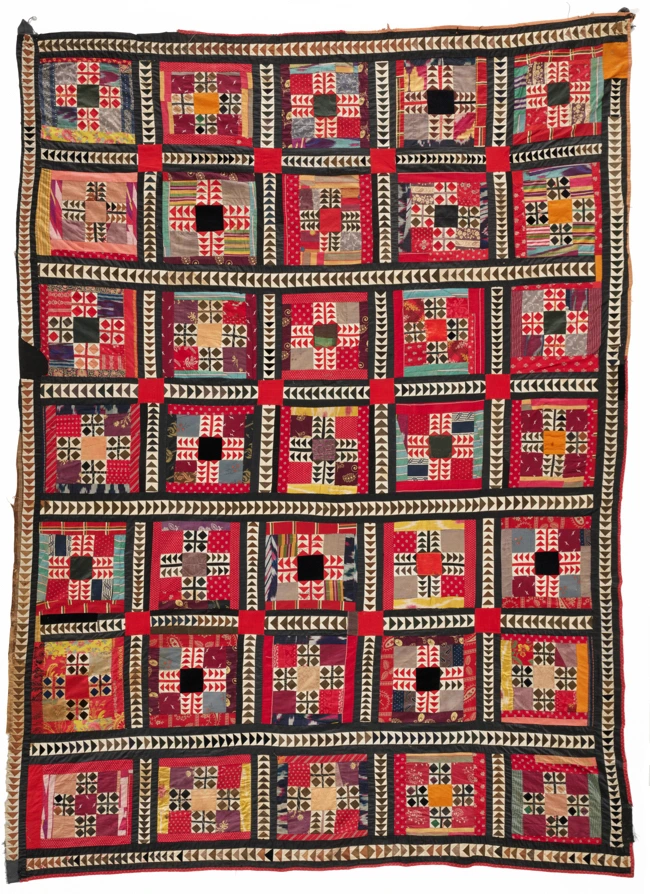
A woven hanging from Afghanistan illustrates the craftsmanship and regional textile knowledge that inspired many of the themes explored in Source Material: Lessons in Responsible Fashion.
Central Asia, Afghanistan, 1900–1970. The Textile Museum Collection 1995.2.1. Gift of James W. Lankton.
While no single technique or material will solve fashion’s environmental challenges, Orsini highlights the growing number of scientists and designers working to improve different parts of the system. “Some of the most promising innovations I’ve seen are trying to do that, " she said. “They’re trying to narrowly focus on one problematic area and fix it.”