
In 2006, during his first deployment with the Army Special Forces, Kevin Horrigan and his roommate survived a powerful blast. In the midst of war, this was not uncommon. Explosions occurred frequently, and the two men felt simply fortunate to have walked away unharmed.
Just a year later, however, Horrigan’s roommate died. Unknown to either of them, he had suffered a brain aneurysm that led to a subarachnoid hemorrhage. What began as a small brain bleed went undetected until it ultimately proved fatal.
In the wake of such a devastating loss, Horrigan found himself questioning how such a thing could have happened. Could it have been detected sooner? How had no one known? How many others would be affected by this kind of injury? These questions would ultimately shape the next two decades of his career, leading him to develop portable technologies aimed at detecting traumatic brain injuries before critical complications develop.
Today, Horrigan is pursuing his PhD in Biomedical Engineering at the George Washington University. His research, however, is more than simply an academic pursuit. He is the founder of Planck Technologies, a growing startup developing portable brain monitoring technology for traumatic brain injury detection. The company’s mission is to bring rapid brain injury assessment into military and prehospital settings, allowing providers to identify neurological injuries earlier and make faster, more informed treatment decisions.
An Unconventional Career Path
Prior to arriving at GW, some of Horrigan’s most valuable lessons came not from academia, but instead from lived experience – and not from a single experience alone. Throughout more than twenty years in the Special Forces, he encountered a wide range of traumatic injuries and began to understand the challenges of delivering emergency care in resource-limited environments.
“I’ve kind of gotten to see and do it all,” Horrigan said.
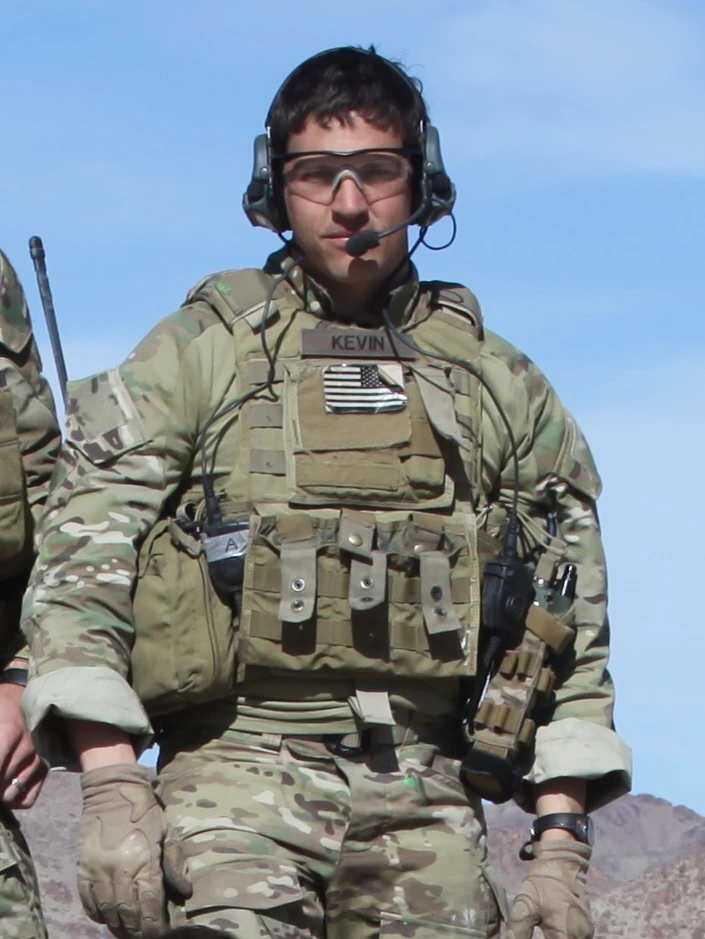
Returning to pursue his PhD represented something of a full circle moment. Although Horrigan had originally hoped to pursue biomedical engineering as an undergraduate, his career ultimately took him in a different direction. After earning his bachelor’s degree in applied mathematics at Virginia Tech, he spent more than two decades in military service while continuing his education, first earning a master’s degree in astronautics focused on spacecraft and satellite design and later a second master’s in computer science.
While Horrigan's collection of degrees might seem unrelated at first glance, they have ultimately come together to form the foundation of his research. Throughout his career, he has never been content to stay within a single discipline, instead viewing every new field as an opportunity to better understand the problems he hopes to solve.
“I like being the dumbest person in every room,” Horrigan remarked. “Whatever subject it is, I want to be around people who know more about that subject than I do.”
The Challenge of Diagnosis
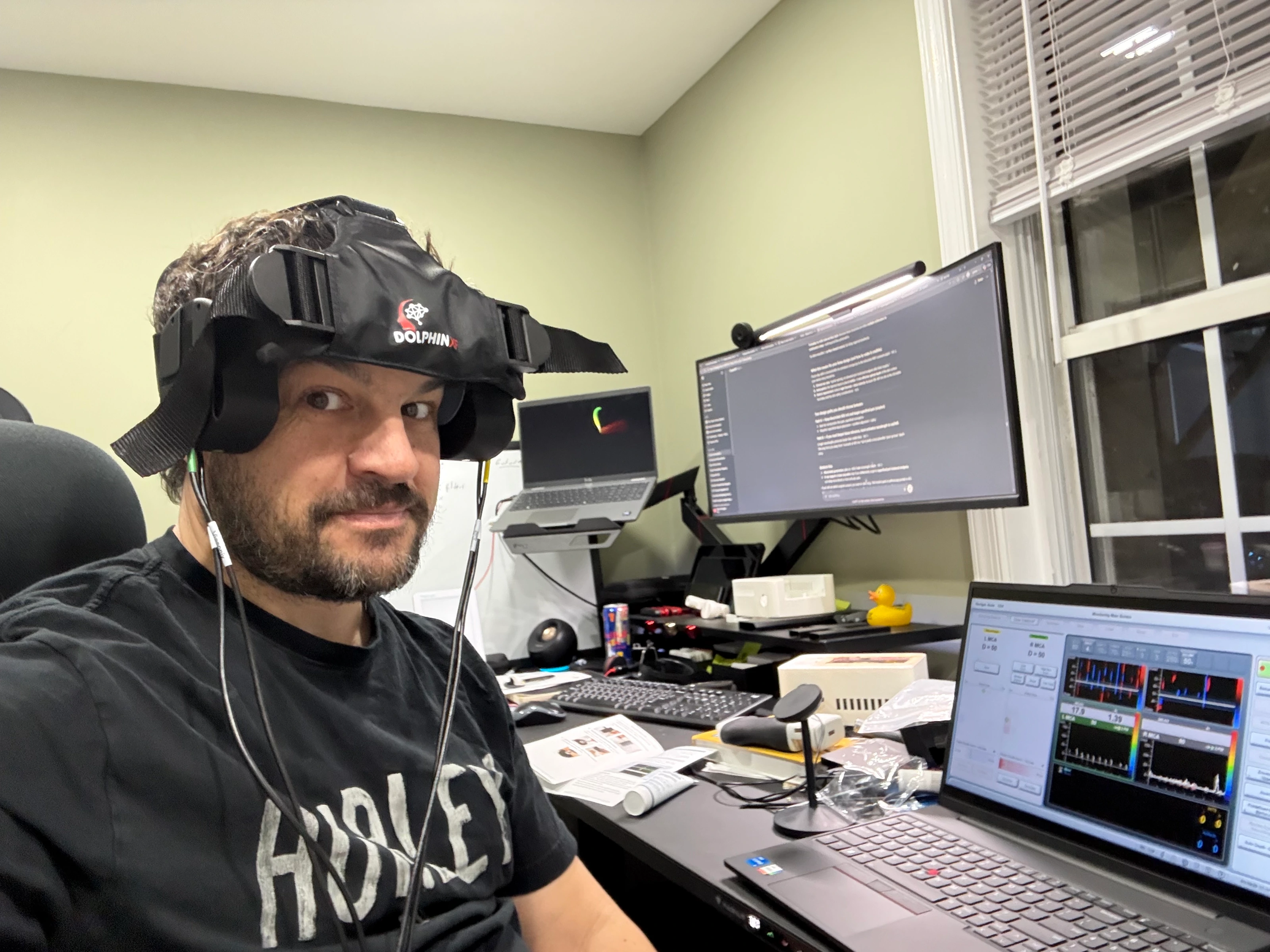
The importance of Horrigan's design lies in its accessibility. Current transcranial Doppler devices are primarily designed for hospitals and require trained specialists to conduct the test and interpret the results. By contrast, Horrigan’s current prototypes combine portable ultrasound hardware with machine learning algorithms capable of automatically analyzing blood flow waveforms. This allows military medics, EMTs, and other emergency providers to rapidly assess patients in settings where specialist expertise might not be readily available.
“I want an EMT to put it on, hit a button, and know where that patient needs to go,” Horrigan explained.
Initially, Horrigan’s goal has been to implement this technology in the military setting, where blast injuries are common and many individuals experience repeated blast exposure in training or operations. The ability to quickly assess neurological injury in these environments could provide critical, even life-saving information.
Eventually, however, the applications of Horrigan’s device could extend beyond military medicine. In pre-hospital emergency care, this technology could help EMTs and first responders identify neurological emergencies sooner, allowing them to determine whether patients should be transported to a comprehensive stroke center, trauma center, or another facility equipped to provide specialized neurological care.
Horrigan compared this degree of accessibility to the role that electrocardiograms (EKGs) play in prehospital care. Where EKGs allow providers to quickly catch heart attacks and other cardiac issues, he hopes this portable technology could someday do the same for traumatic brain injuries and strokes.
Incremental Progress and a Solution Worth Searching For
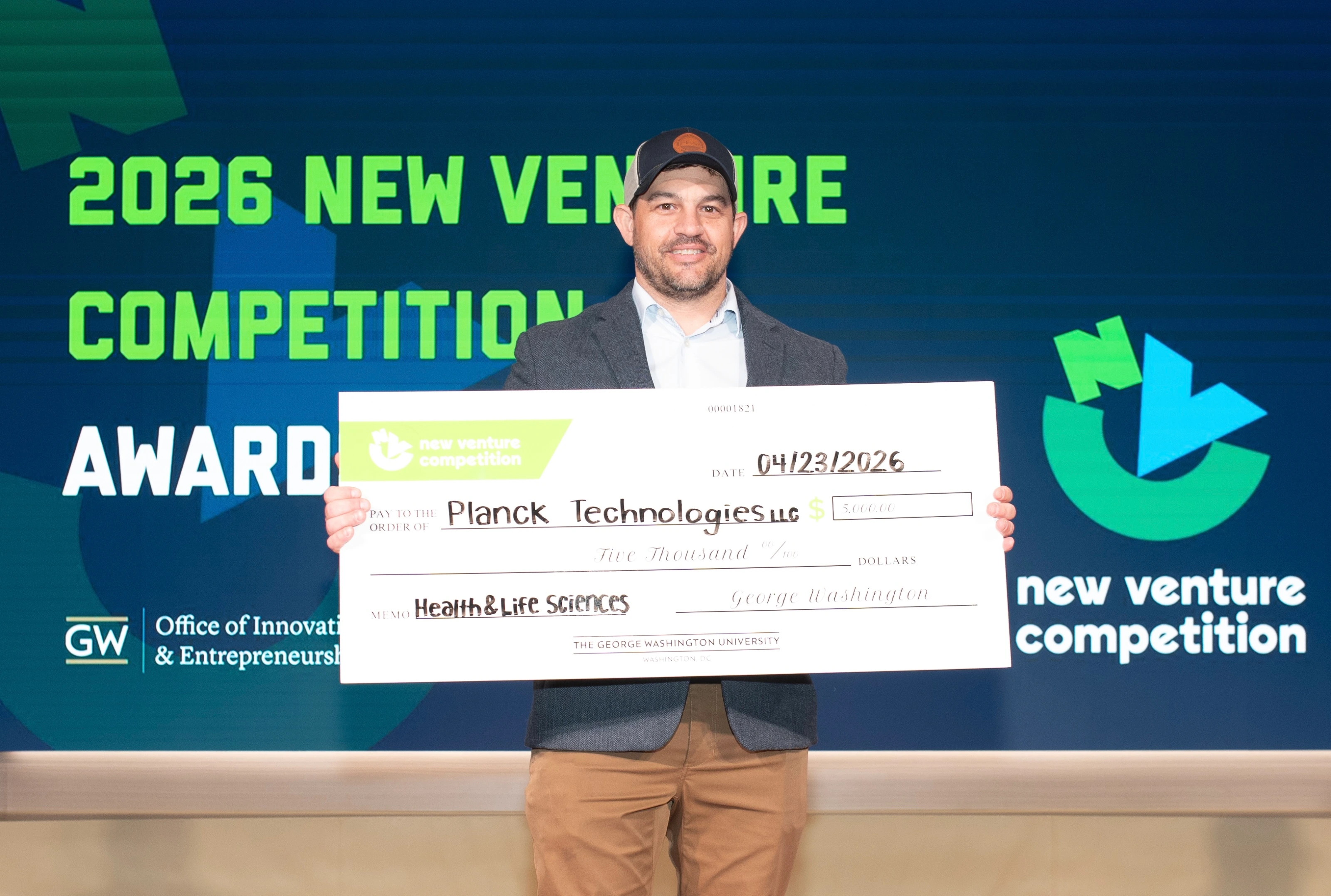
While Horrigan is accustomed to working through technical problems and engineering challenges, this kind of innovation has brought new challenges to the table. As one of the winners of GW’s New Venture Competition on the Healthcare and Life Sciences track, he has needed to expand his expertise beyond engineering to create a product that can ultimately reach those who need it. Rather than focusing solely on refining the technology in the lab, this meant learning how to secure funding, develop partnerships, and market his product to the appropriate audience.
For Horrigan, who is used to multidisciplinary work, this need reinforced what he already knew – that emerging innovation rarely occurs in a bubble.
“There are a lot of smart engineers,” Horrigan said. “But getting technology out into the world requires a completely different set of skills.”
Thus, collaboration and multidisciplinary work have become critical to both the development of Planck Technologies and Horrigan’s broader approach to research and problem solving. After all, if the problem itself doesn’t fall within a single discipline, why would the solution?
Horrigan acknowledged that significant work remains ahead, including additional larger-scale testing and regulatory approval. It may take time for his device to become a regular part of emergency care. Still, he aims to keep pushing forward.
“Most days, it might feel unfulfilling because it’s slow,” Horrigan admitted. “Day by day it’s incremental, but some day we’ll get there.”
While incremental progress may feel slow, it’s often the sign of a solution worth searching for. Each small step forward, each multidisciplinary collaboration, and each new breakthrough brings forth a new possibility: that the same kind of invisible injuries which sparked Horrigan’s mission twenty years ago may finally be brought to light.