
Few denied that NASA’s Apollo 11 mission, the first that landed humans on the Moon in July of 1969, was one of the most astonishing scientific achievements to date.
However, it wasn’t universally popular.
Civil rights leader Reverend Ralph Abernathy criticized the mission’s use of federal funds, famously attending the mission launch with a sign that read “$12 a day to feed an astronaut, we could feed a starving child for $8.” Many similarly wondered: Why launch taxpayer money to the moon before resolving the problems we face here on Earth? These protests didn’t prevent the launch, but they raised important questions about humanity’s place in space.
Since 1969, national science and space priorities have changed, and nobody knows it like NASA. The White House Budget Request in the fiscal year 2027 proposed a $5.6 billion (23%) cut for NASA, arguing that “cutting unnecessary and overpriced activities” will strengthen the agency’s focus on national interests in space, including “deliver[ing] tangible benefits to life on Earth.” Now more than ever, NASA’s deliverables must directly benefit the everyday taxpayers and commercial space sector of the United States.
While many projects are being slashed, the nominal launch timeline for NASA’s DAVINCI mission was accelerated. DAVINCI, designed to study the evolution and current state of Venus, will send a spacecraft and an accompanying descent probe to our sister planet. While the spacecraft maps the planet's surface from orbit, the probe will descend through the atmosphere, measuring chemical makeup, temperature, pressure, winds, and weather events along the way. The question from Apollo 11 resurfaces: How on Earth (or on Venus) will DAVINCI deliver tangible benefits to life on our home planet?
Dr. James B. Garvin, the principal investigator of DAVINCI and chief scientist at NASA Goddard Space Flight Center, explains that answers can be found anywhere from our skies to beneath our oceans.
First, it is important to consider NASA’s evolving purpose. Garvin argues that the agency’s deliverables are not the ends, but rather the means for future exploration and operations. “NASA is the business market catalyst that will show the way,” Garvin explained, describing the agency's role in exploring high-potential ideas that are too costly for industry actors to develop alone. For example, Sputnik 1 and Explorer 1, the first Soviet and American satellites launched into orbit, demonstrated viability for the commercial satellite constellations that provide Internet access around the globe today.
DAVINCI is putting many similar high-potential, commercially viable ideas to the test. For instance, Venus’ severe atmospheric pressure requires that the mission’s descent probe and pressure seal are developed with pressure tolerances unrivaled by any previous technology. For the next high-pressure endeavors in space, under the ocean, or deep beneath the Earth’s terrain, Garvin said that “the next people, including entrepreneurs, can start from it” instead of from scratch. “If you want to drop a spacecraft that is really robust into a really nasty place, then we have a spacecraft for you. It’s a really tough cookie.”
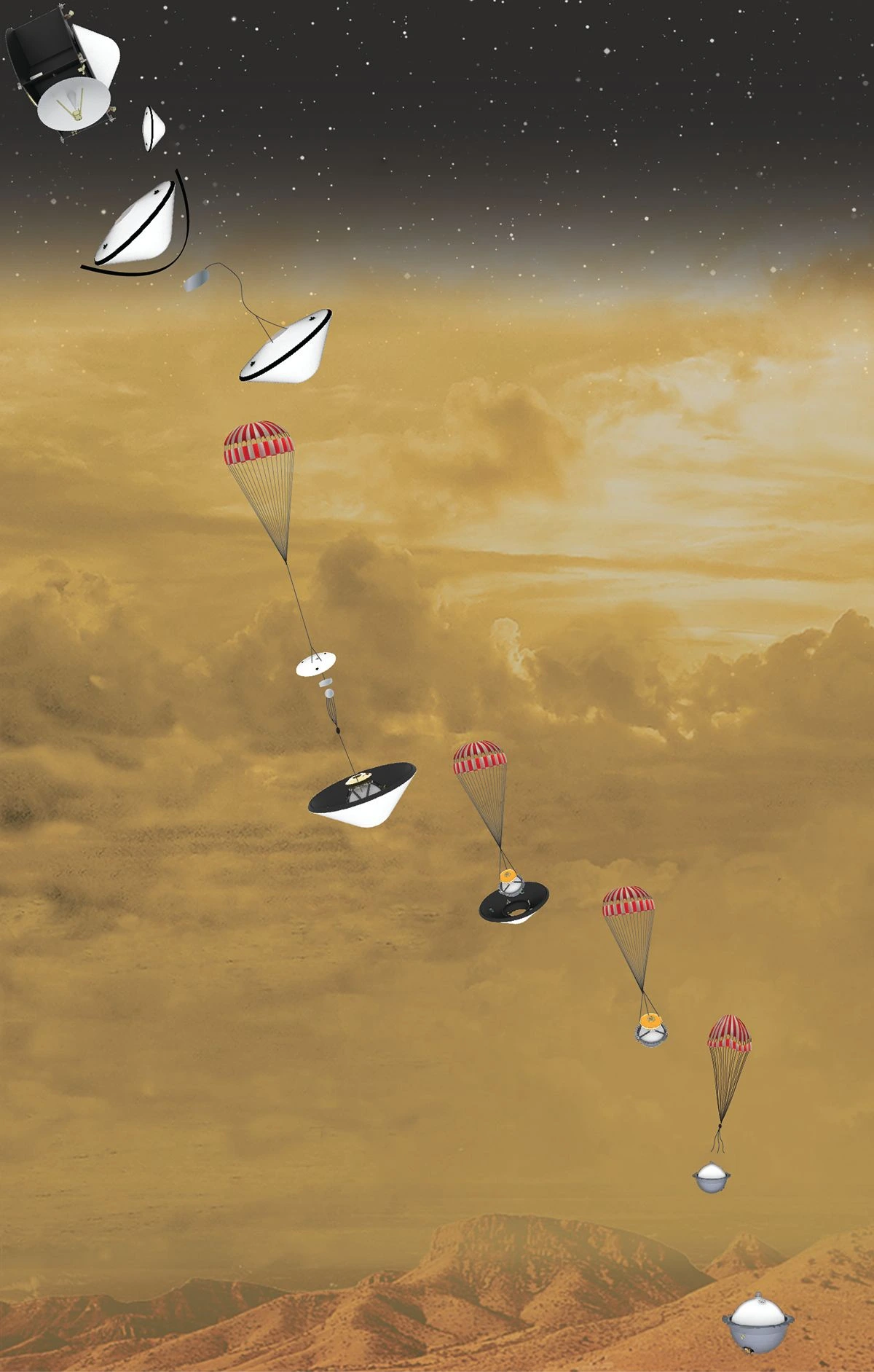
In addition to hardware, DAVINCI engineers have developed breakthrough communication techniques for data transmission between the descent probe and orbiting spacecraft. Similar to one’s home Internet, the upload and download speeds change in response to signal strength. In the case of DAVINCI, the probe will dynamically dial the connection bandwidth in reaction to rapid changes in Venus’ atmospheric conditions, enabling stable uplink and downlink through harsh, unfamiliar atmospheric conditions. This advanced technique can be widely adopted by the telecommunications industry to ensure that users can stay connected to emergency services during severe weather events.
The mission’s objectives include further human safety applications. Consider the planned survey of the volcanoes on the Venusian surface. Many researchers hypothesize that they once sat beneath ancient oceans. “What can we learn about the volcanic activity on Venus, and what does it suggest about volcanic activity on Earth?” Garvin asks.
By virtue of being beneath the ocean surface, Earth's submarine volcanoes are difficult to study. In 2022, one in the Pacific Ocean's Tongan archipelago erupted and completely destroyed its host island. While that island was luckily uninhabited, similar submarine volcanoes sit beneath highly populated regions, including Hawaii. By testing the ocean hypothesis and conducting an initial survey of volcanic terrain, DAVINCI will collect the information needed for future missions to study these once-submarine volcanoes in unprecedented detail. Resulting scientific discoveries will enable improved monitoring of the submarine volcanoes on Earth, allowing us to plan for the next eruption. “The safety of society depends on situational awareness,” Garvin said—and DAVINCI will provide exactly that.
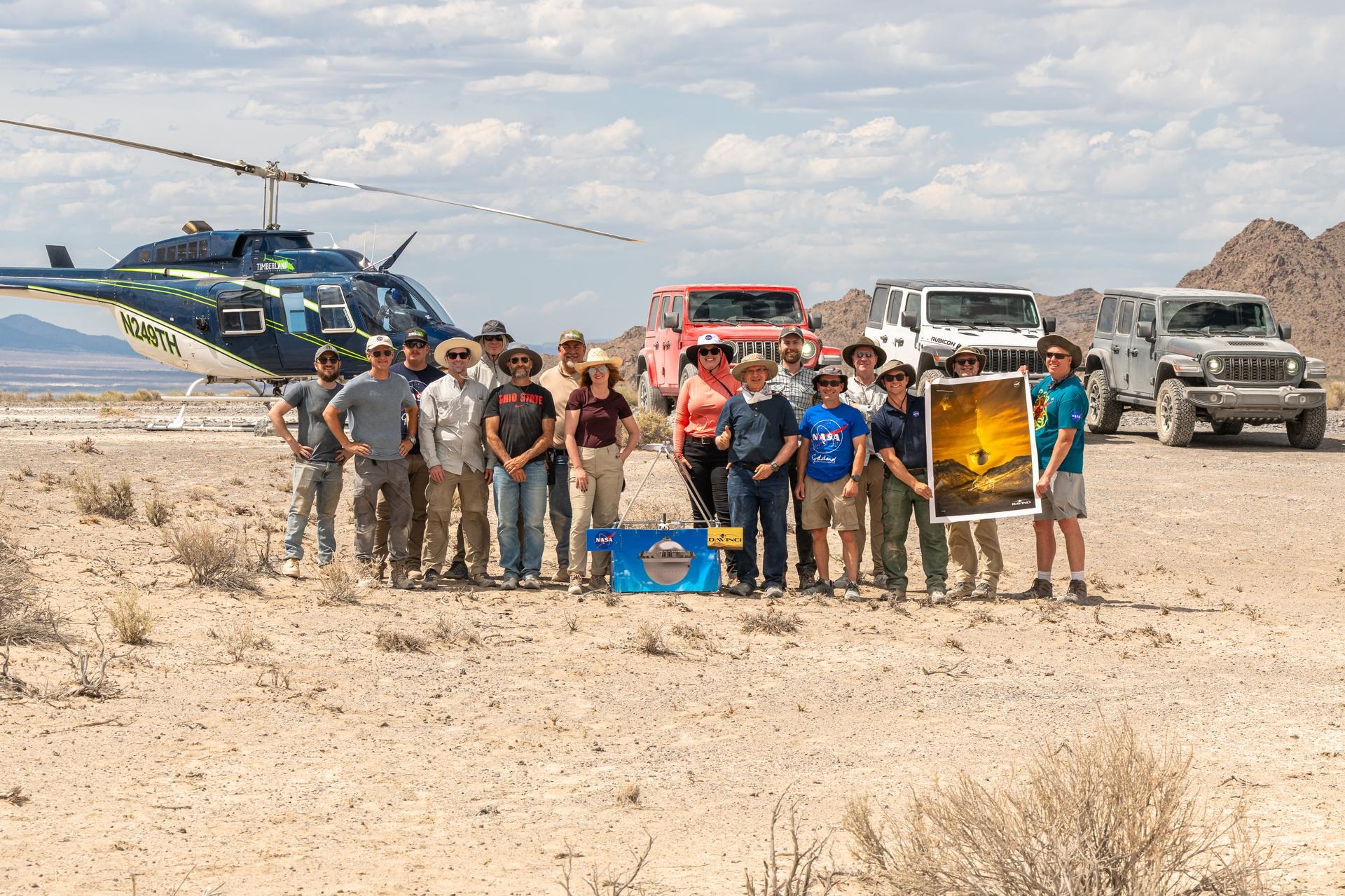
Without much insight, one might dismiss DAVINCI as wastefully launching taxpayer money to Venus that would be better spent solving problems here on Earth. However, approaching the mission with an open mind reveals how closely it aligns with national science priorities, delivering value to life on our home planet that ranges from industry to public safety. To Dr. Garvin, these benefits are not simply a byproduct of achieving DAVINCI’s exploratory endeavors, but are central objectives that embody the mission of NASA. “NASA’s value is not to do it all. It’s to find the partners to do enough, so they take the ball and run,” Garvin explained, highlighting how the agency broadly supports commercial, research, and humanitarian goals. As NASA grows the tree, the world picks its fruits. It is through this collaboration that humanity develops its place in space.