
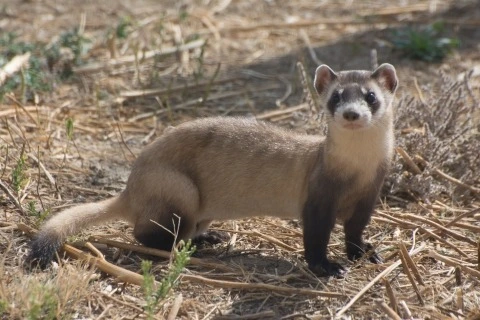
In 1979, black-footed ferrets were declared extinct, after the last known individual died in captivity. Two years later, a dog named Shep showed up at his family’s ranch with a dead animal in his mouth from the Wyoming prairie. It was a small, slender, mammal with distinctive black feet and a black-tipped tail. It was a black-footed ferret.
What happened next is one of conservation’s most successful comeback stories. Researchers and members of the conservation community flocked to Meeteetse, where Shep lived, and found the last colony of black-footed ferrets left in the wild. They brought the 18 remaining ferrets out of the landscape, and founded a captive breeding program that has since produced more than 10,000 black-footed ferrets.
But despite decades of progress, black-footed ferrets continue to face a number of challenges such as habitat and prey availability, disease, and inbreeding, and they still require human intervention to ensure long term survival as a species.
“It’s not a story that’s finished,” said Dr. Alexandra DeCandia, an associate teaching professor and molecular ecologist at Georgetown University who studies black-footed ferrets.
As researchers are learning more about the molecular health of black-footed ferrets, they are increasingly interested in the influence of epigenetics — how behavioral and environmental factors affect the expression of genes. Staff at breeding facilities have noticed, for example, that black-footed ferrets raised in captivity face decreased fertility compared to those in the wild. In recent years, research conducted by Dr. DeCandia and her colleagues at other institutions have linked this disparity to epigenetic differences in the DNA of the two groups, continuing exploration into the role that environment plays in black-footed ferret health.
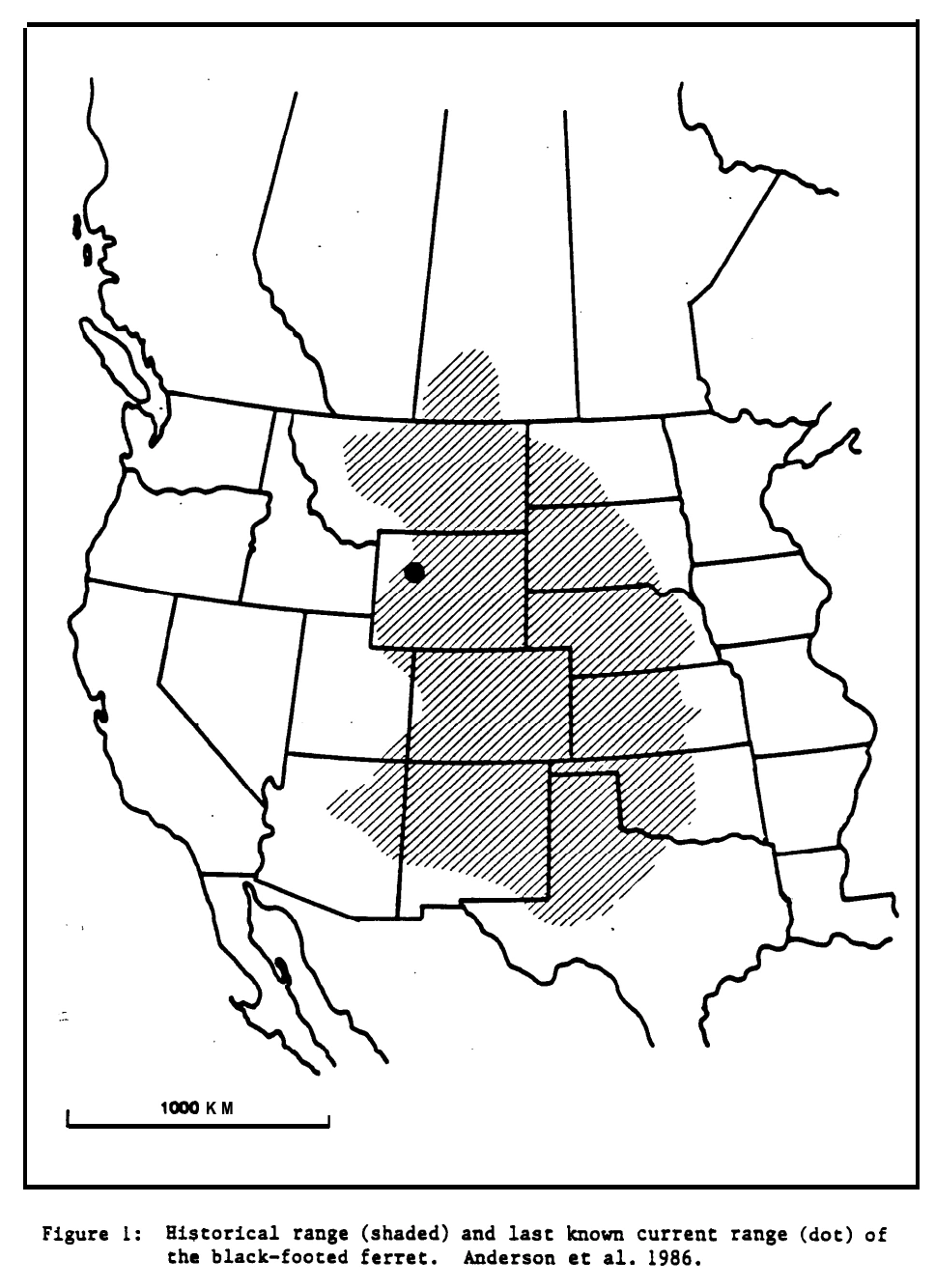
Back in the late 1800s, an estimated 500,000 to a million black-footed ferrets were found throughout the Great Plains of the central U.S. Black-footed ferrets are endemic to North America and are the only ferret found in the region. But habitat loss, disease outbreaks, and a struggling prey population almost led to their extinction. Prairie dogs make up 90% of their diet, and their numbers plummeted from disease and targeted efforts to eradicate them.
When the scientists brought the last 18 black-footed ferrets out of the wild, only seven of them were able to reproduce successfully. Nearly every black-footed ferret born since has come from these seven ferrets.
“As you can imagine, when you have just seven genetic founders, there's not a lot of genetic diversity at all in the ferret population,” Dr. DeCandia said.
This is a big conservation concern because inbreeding makes populations more vulnerable. It can lead to reduced fertility, greater susceptibility to disease and environmental changes, and an increased chance of inheriting harmful mutations.
“This reduction [in fitness] results in further loss of variation and potentially greater levels of inbreeding depression, which will again reduce fitness, creating a cycle referred to as the extinction vortex,” said Colleen Lynch, a senior curator at the Smithsonian Conservation and Biology Institute also involved in research, in response to emailed questions.
Cloning is one way the research community has tried to address this problem in an effort to introduce more genetic diversity. Three black-footed ferrets have been cloned from one of the original ferrets that wasn’t able to reproduce at the time, named Willa. Two of them have gone on to successfully bear kits of their own.
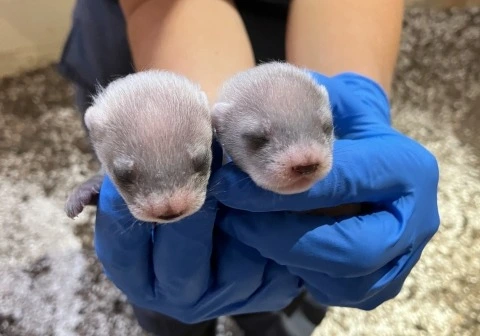
Scientists are interested in how this inbreeding depression affects their reproductive health, and what factors might mediate this relationship, as they try to maximize breeding success in the black-footed ferrets.
“Low reproductive success among ex situ (captively held) black-footed ferrets has been noted for some time. About 50% of females at our Center will not become pregnant each year despite being bred with potentially fertile males,” said Robyn Bortner, a captive breeding manager at the USFWS’s National Black-Footed Ferret Conservation Center who is also a part of fertility research in the species, in a written response to emailed questions.
Technicians have observed changes in sperm characteristics across breeding facilities as well, and the causes continue to be investigated and debated. This line of research into epigenetics is an exploration of one of many potential causes.
Epigenetic modifications operate above the gene level, regulating gene expression. Not all genes are turned on, or expressed, at the same time. They can be turned on or off.
“Epigenetic mechanisms act as these on switches that allow gene expression, protein creation, all that great downstream stuff to happen,” Dr. DeCandia said.
This epigenetic variation can change throughout the lifetime of an organism.
“It can be potentially adaptive and help them really quickly respond to a stressor. It can be maladaptive if it's harming the animal. And in some cases, we know that it can be transmitted to offspring,” she said.
In an initial study by Dr. DeCandia, Bortner, and colleagues, they analyzed the DNA of captive male black-footed ferrets for epigenetic patterns — specifically DNA methylation — associated with regions related to reproductive phenotypes. They decided to focus on methylation because it’s the most well studied epigenetic mechanism in mammals.
DNA methylation adds methyl groups to cytosine bases in the DNA. This reduces gene expression by causing the DNA to be packed more tightly. Demethylation is the reverse process that opens up the DNA, allowing greater access of the gene to transcription machinery. Environmental conditions can influence methylation.
The scientists looked at methylation in blood, testes, and sperm samples to see where methylation patterns differed between ferrets. They compared this against a gene ontology database and found that some of these regions were related to gene networks involved in reproduction and development. Associated phenotypes included average litter size, sperm count, and testes firmness.
In a follow-up study published last year, the researchers decided to hone in on sperm, since it exhibited the strongest reproductive relevance in the prior study. They sought to explore whether the environment could be a factor driving this epigenetic variation. With sperm samples from 12 captive and five reintroduced black-footed ferrets, the study authors were able to perform comparative analyses of their methylation patterns.
Researchers found over 500 differentially methylated regions between the captive and wild black-footed ferret sperm samples, which were related to reproduction and development as well. Average DNA methylation was higher in captive individuals. While this result does not prove causation, it provides a confirmation of a potential link between environmental conditions and modified DNA methylation patterns in sperm, which could explain the reduced fertility experienced by males in captivity.
Scientists still have so many unanswered questions about what the underlying causes might be, however, but there are few theories that they are trying to investigate.
“It's what I love about science. Every time you answer a question, you have about 10 more that you want to ask,” Dr. DeCandia said.
The captive environment and wild landscape are so different, she explains. A lot of interest is focused on the influence of different diets, as well as microbiome exposure.
“[Black-footed ferrets in the wild are] exposed to a lot of different environmental situations, a lot of different species,” she said. “And so it reminds me a little bit of the hygiene hypothesis. So that is this idea that you tend to get more allergies in places where there's more sterility.”
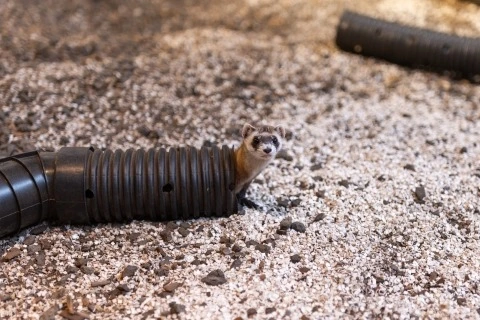
Additionally, differing black-footed ferret behavior may also contribute to differences in epigenetic patterns.
“Many of the males with significant DNA methylation that had a low reproductive phenotype were also behaviorally aggressive toward females and difficult to breed,” Bortner said. “I would be curious to see if there is a link between these two observations.”
There may be potential implications for black-footed ferret care in the future, but for now, researchers are just trying to better understand as much as they can about the health of these animals.
“It gives us a lot more information about this species that's endemic to North America and kind of part of our cultural heritage,” Dr. DeCandia said.
“Ultimately, the goal is just to help black-footed ferrets survive — to keep them healthy, to keep them well. The ultimate dream would be to have them not require any kind of human intervention at all,” she said.